


Senator Steven Bradford

Dr. Amos C. Brown
Vice Chair

Dr. Cheryl Grills
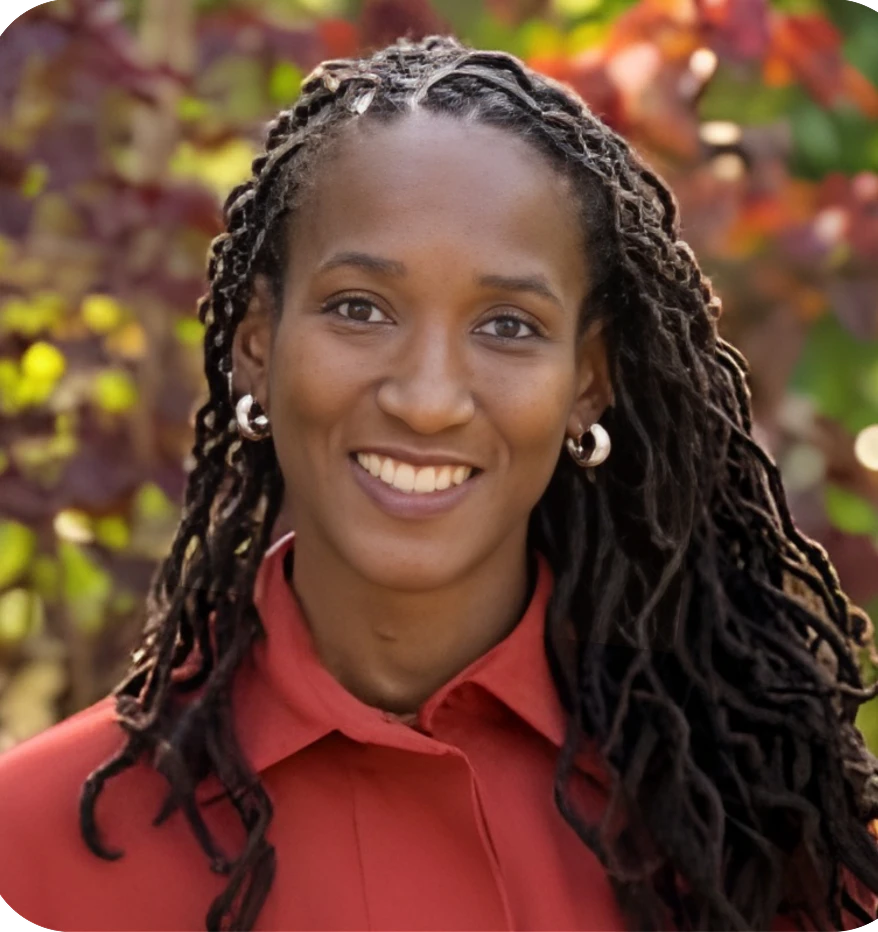
Lisa Holder
ESQ.

Reginald Jones-Sawyer
Assemblymember

Dr. Jovan Scott Lewis

Kamilah Moore
Chair
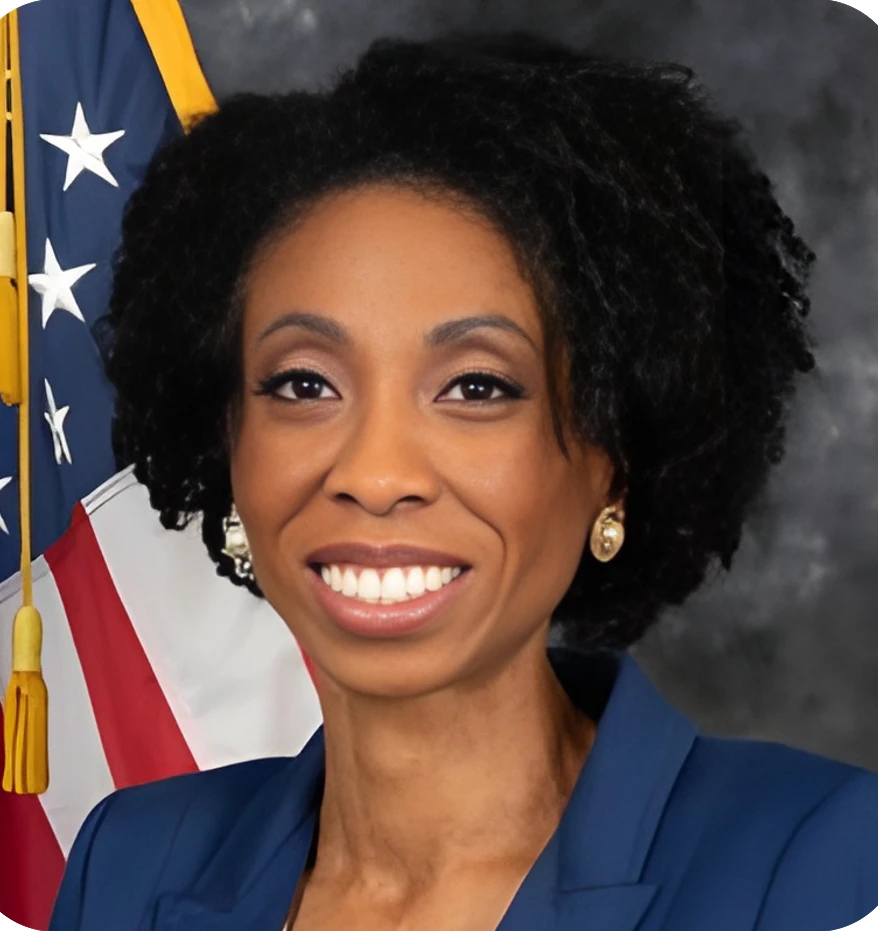
Monica Montgomery Steppe
Councilmember

Donald K. Tamaki













































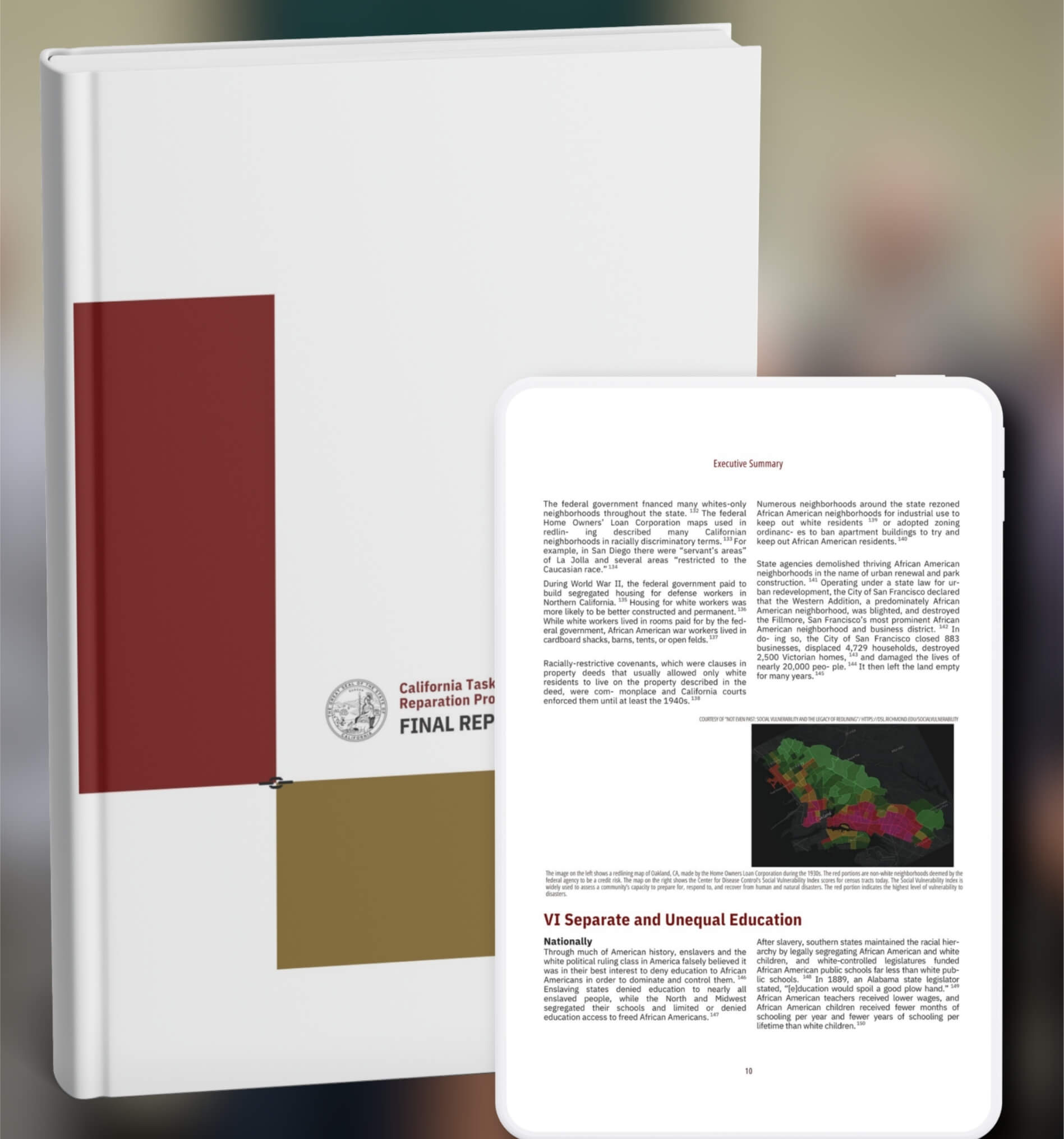
The historic report by the California Reparations Task Force draws a throughline from the harm of 246 years of enslavement, 90 years of Jim Crow and racial terror, and decades more of continuing discrimination, resulting in today’s grossly disparate outcomes for Black Californians. The report includes 115-plus policy recommendations to the California State Legislature to stop the harm from continuing and to determine a feasible long-term approach to address the harms that were centuries in the making.
A May 2023 poll from UCLA’s Ralph J. Bunche Center for African American Studies found strong support in California for a range of reparations measures for Black Americans, particularly those focused on systemic reforms and investments in communities.
Following the murder of George Floyd on May 25, 2020, the United States experienced the largest protests in its history, as millions of people across the country called for a racial reckoning and meaningful action to address systemic racism. In response to this national moment and longstanding advocacy from Black communities and leaders, the California Legislature passed Assembly Bill 3121 in September 2020, establishing the California Task Force to Study and Develop Reparations Proposals for African Americans.
The Task Force was charged with examining the historical and ongoing harms experienced by descendants of enslaved African Americans and developing recommendations for reparations. Over the course of two years, the Task Force held dozens of public hearings, gathered expert testimony, and reviewed historical and economic evidence documenting the role of government and private institutions in perpetuating anti-Black discrimination.
In 2023, the Task Force issued a comprehensive report outlining findings and recommendations for how California can begin to repair these harms and address the lasting impacts of slavery and systemic racism.
Document the harm of slavery and the continuing impact of ongoing racial discrimination.
Recommend appropriate ways to educate the California public about the task force’s findings.
Recommend appropriate remedies to the Legislature.
Five members of the Task Force were appointed by Governor Gavin Newsom. Four members were appointed by the Legislature. The nine members are:
Vice Chair
ESQ.
Assemblymember
Chair
Councilmember
The Task Force convened in June of 2021, and on June 29, 2023, after 2 years of work, the Task Force presented to the Legislature its Final Report its ground-breaking, authoritative 1,100 page Final Report, consolidating 27 hearing days and 48 hours of testimony from expert and lay witness statements, public comment, and an array of records and materials submitted to the task force. The Final Report traces the harm of 246 years of slavery, 90 years of racial segregation after slavery ended, and decades more of continuing discrimination—resulting in today’s outcomes, which are at once shocking, but sadly, not surprising.
The Final Report also contains more than 115 policy recommendations for reforms in education, housing, health care, policing, the wealth gap, and other areas of huge and growing racial disparities.
AB 3121 required the Task Force to determine economic methodologies for calculating the harm to eligible individual Californians. To this end, we hired 4 economists to develop data-based methodologies for calculating the harm in order to educate the public of its enormous economic consequences.
However, despite news media coverage (e.g. N.Y. Times, Wash Post, etc.) reporting that the Task Force has recommended specific compensation of “$1.2M” or “billions,” etc., (unlike the San Francisco Reparations Committee) the State Task Force has never recommended that the state pay any specific amount.
Moreover, each of the proposals are important, so therefore, the Task Force did not recommend that, for example, individual compensation should be prioritized over reducing Black infant mortality, or houselessness, or the “school to
prison” pipeline”.
Instead, we have called upon legislators consider, balance, and make a long-standing commitment to implement a reparations approach spanning years—in good economies and bad to address harms that have been decades, if not centuries, in the making. Reparations has to involve policies changing systems that continue to churn out racial disparities; it cannot be a “one-and-done.”